Why Decoder Drift Might Be the Biggest Commercial Problem Nobody Talks About
6 min read
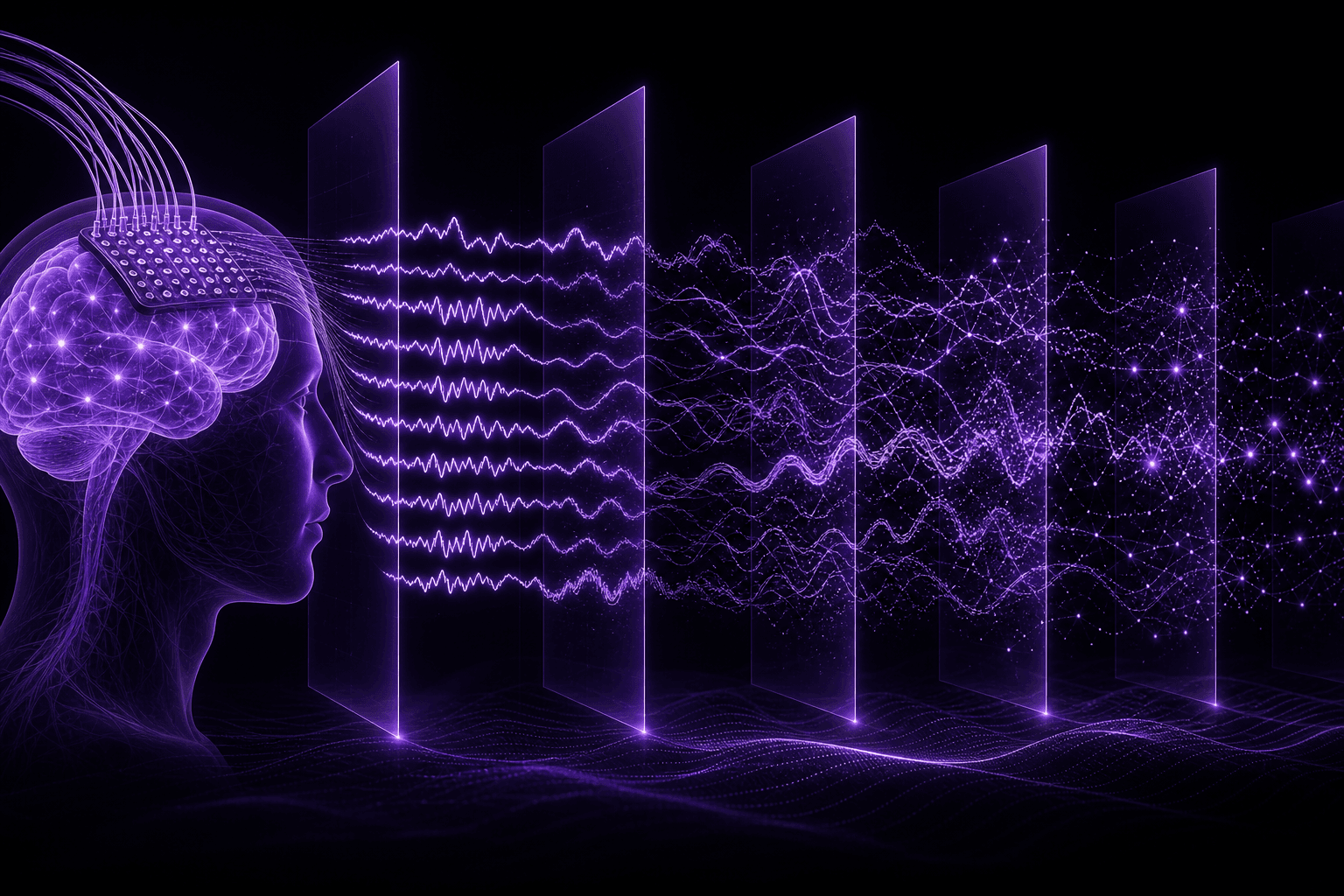
Most BCI demos look impressive for a fairly simple reason: they're short. Give a system a controlled setting and a fresh calibration, and modern decoders handle intended movement or speech remarkably well. Patients type, move cursors, even produce synthetic speech close to real time.
The harder question is what happens a week later, a month later, a year later. That's where decoder drift tends to show up, quietly, and where a lot of otherwise promising systems start to fall apart.
Decoder drift is what happens when the relationship between a person's neural signals and their intended output shifts gradually over time. It isn't really a bug so much as a fact about biology.
Neurons adapt. The strategies a brain uses to perform a task change. Electrodes move at a microscopic scale as tissue responds to them. Any one of these on its own can be enough to throw off a trained model. Some reported systems lose meaningful performance within days if nobody recalibrates them, dropping from something like 90 characters a minute to half that or worse.
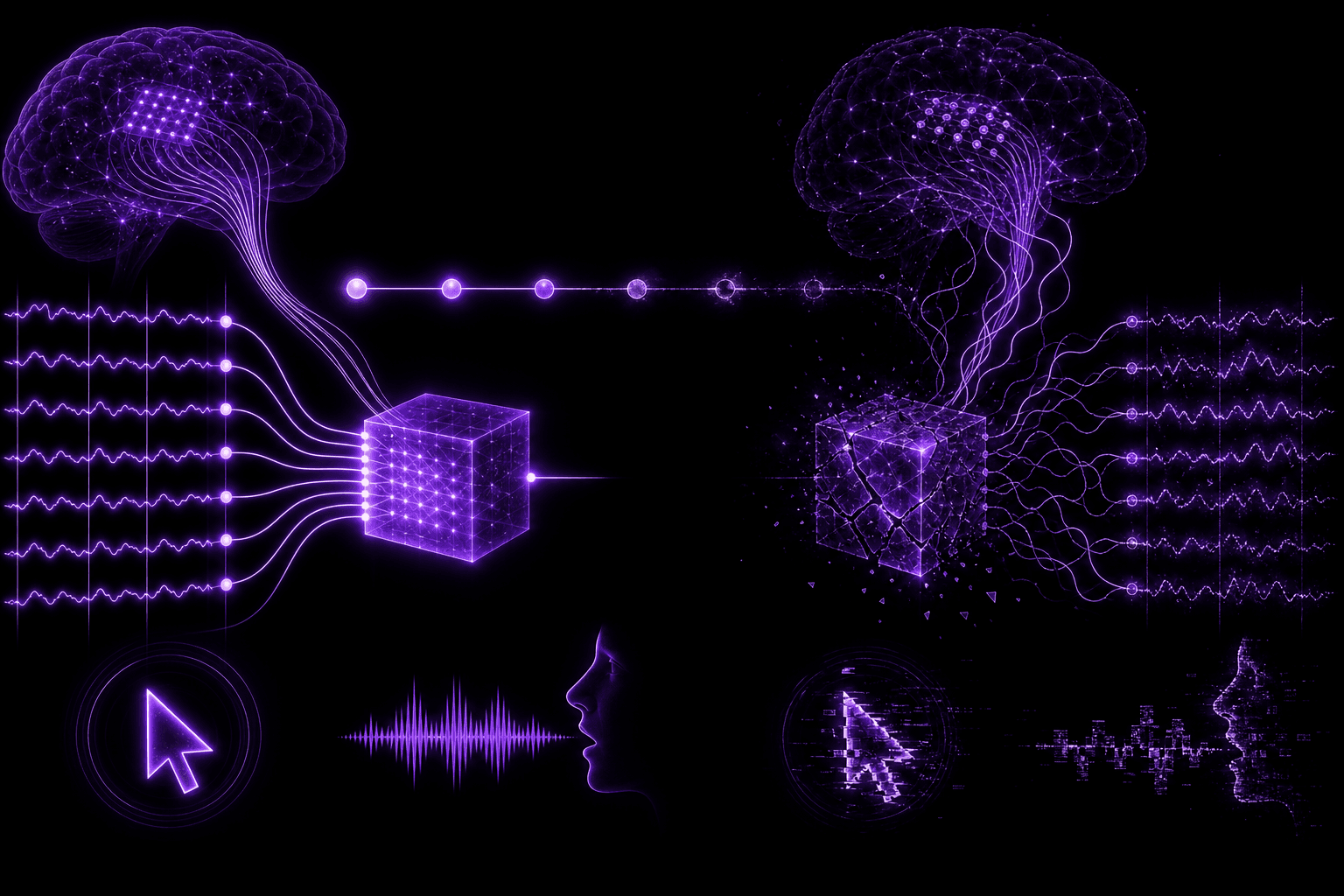
That's a fascinating finding if you're a researcher. It's a genuine liability if you're trying to ship a product, because no user experiences the phrase "decoder drift." What they experience is a device that quietly stops doing what it promised. In a clinical setting that shows up as less daily use, more frustration, a heavier support load, and clinicians who trust the system a little less each time it slips.
Strip away the language and it's a retention problem wearing the costume of a modeling problem.
It's tempting to assume better machine learning solves this on its own, through online learning or domain adaptation or simply more data. But BCIs run into constraints that make that harder than it sounds. There's very little labeled data available after implantation, since nobody wants to sit through constant calibration tasks. Safety-critical systems can't have their models updated freely without running into regulatory friction. Every patient is effectively its own domain, and these systems have to hold up for years rather than weeks.
So what starts out looking like a model problem quietly turns into an operational one. Every dip in performance can trigger a recalibration session, pull in a clinician, require a software patch, or force a patient back through retraining. None of that scales gracefully, and in healthcare, anything tied linearly to human support gets expensive fast and even harder to get reimbursed.
A BCI company rarely fails because its demo underwhelmed anyone. It fails once its users quietly stop relying on it. Decoder drift lives exactly in that gap between an impressive demo and a product people can actually count on, and it introduces friction into the experience, the clinical workflow, and the cost structure all at the same time.
The encouraging part is that this isn't an unsolved problem so much as an underbuilt one.
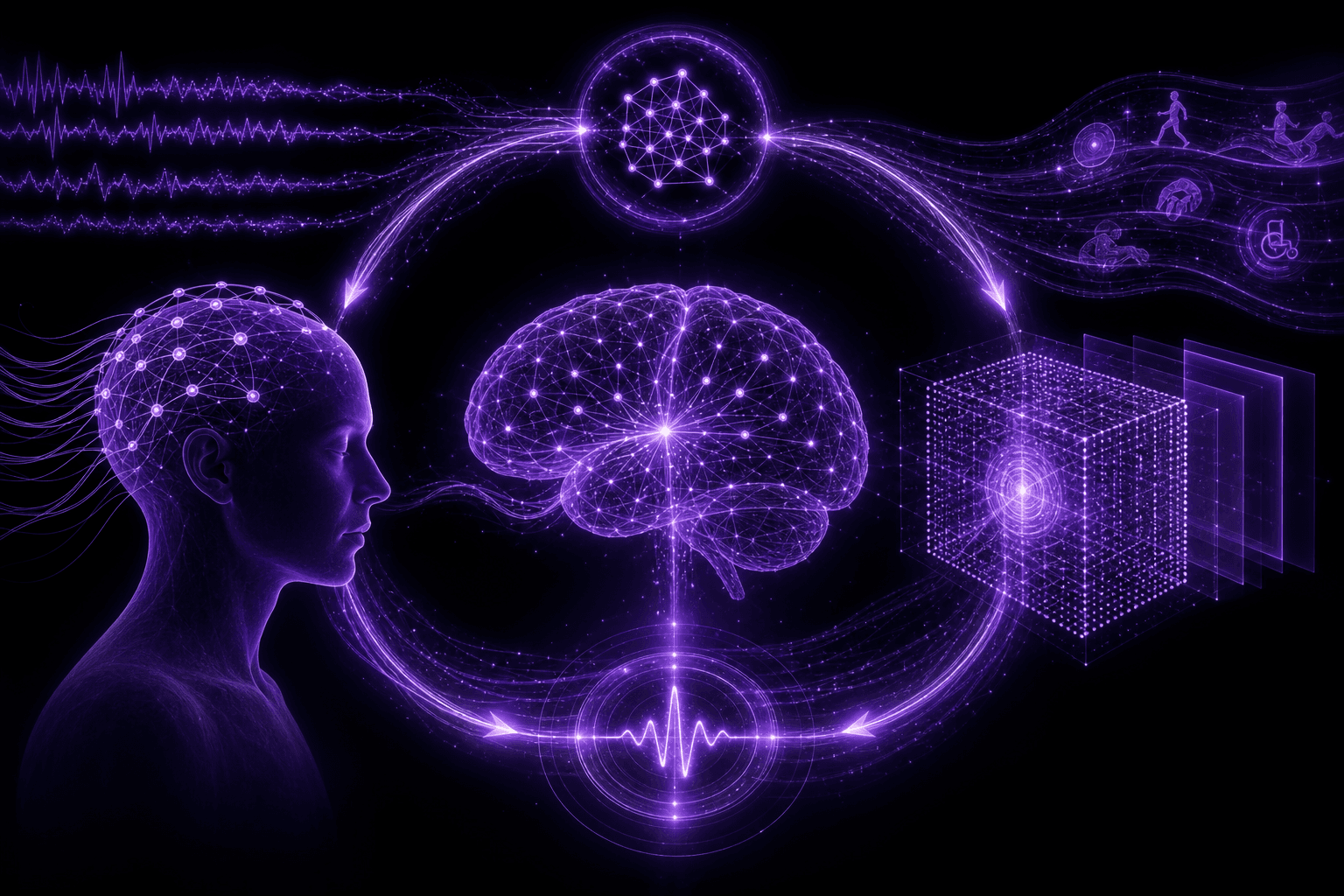
There are real paths forward: decoders that adapt continuously and passively as they're used, shared representations that cut down how much training any one user needs, systems that catch their own degradation before the patient notices, approaches that blend neural signal with behavioral context, and recalibration that's light enough to fold into a normal day. What's missing isn't the ideas. It's a team treating drift as core to the product rather than something to patch after launch.
Where this could be wrong
Better hardware could cut into this more than expected. More stable electrodes or sharper spatial resolution might keep signals consistent enough that drift becomes a smaller issue than it looks today. Foundation-model-style approaches trained across large numbers of patients could also meaningfully reduce how unstable any one person's signal is. Even so, some amount of drift is probably unavoidable. Biology just doesn't hold still.
What this means for founders
Building in BCI means building more than a decoder. It means building something that keeps adapting without constant supervision, holds its performance across months and years, degrades gracefully when it slips, and doesn't lean on a clinician every time it needs a fix. Reading the brain well once might not be the hardest part of this problem. Doing it reliably, every single day, while the brain itself keeps changing underneath you, probably is.
WorldChangers is a BCI startup accelerator — at most 10 early-stage companies per batch. If you're building at the brain-machine boundary, applications for Batch 01 are open.
Building at the brain–computer interface?
Apply to Batch 01