The Next Neuralink Won't Win Because of Better Electrodes
5 min read
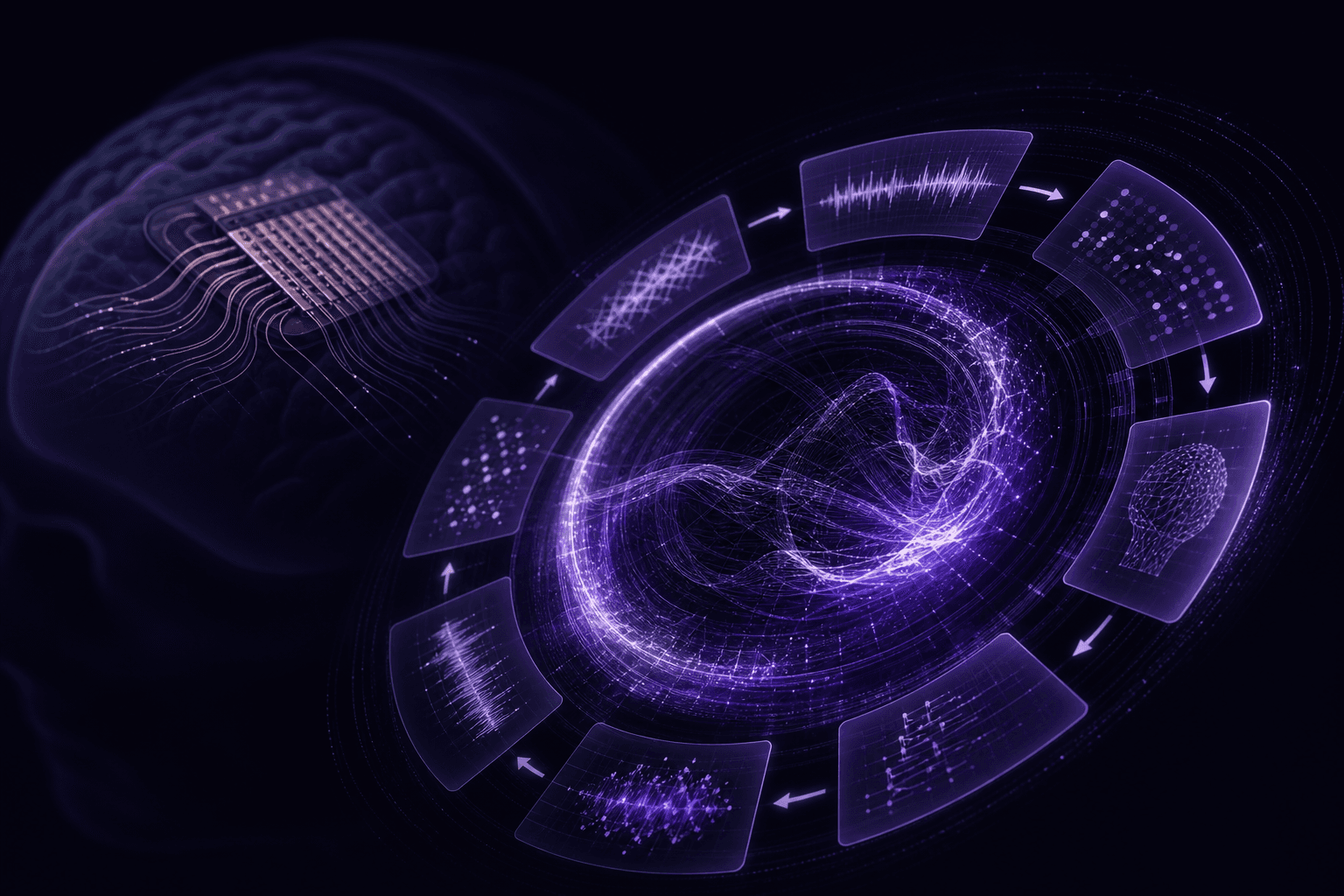
The default assumption in brain-computer interfaces is that this is an engineering race, and that whoever builds the highest channel count device, the most biocompatible material, or the cleanest signal pipeline comes out ahead. That framing is starting to break down.
Neural interface hardware has improved faster than most people give it credit for. Neuralink has demonstrated implants with over 1,000 channels. Blackrock arrays have been used in humans for years. Synchron has shown fully implanted, wireless systems that avoid open brain surgery entirely. Signal quality, safety, and implantation methods are all converging toward something that actually works day to day. Not perfect, but usable — and that shift in degree changes everything downstream of it.
Once several platforms can reliably pull meaningful signal out of the brain, enough to move a cursor, produce text at somewhere around 60 to 90 characters a minute, or restore basic motor intent, the bottleneck moves. Squeezing more density out of the electrode array starts to matter less than what a company actually does with the data once it has it. Recording was the hard problem for a long time. Now interpretation is.
That's a tougher problem than it looks, because neural data breaks a lot of the assumptions standard machine learning is built on. It's high dimensional, it doesn't stay still over time, and it behaves differently from one person to the next depending on context. A given neuron can fire differently across days for reasons nobody fully understands. Whole signal distributions can drift over weeks as tissue responds to the implant, as electrodes shift by fractions of a millimeter, or simply as a patient's own strategy for performing a task evolves. Two patients with identical hardware can end up presenting the decoder with entirely different problems.
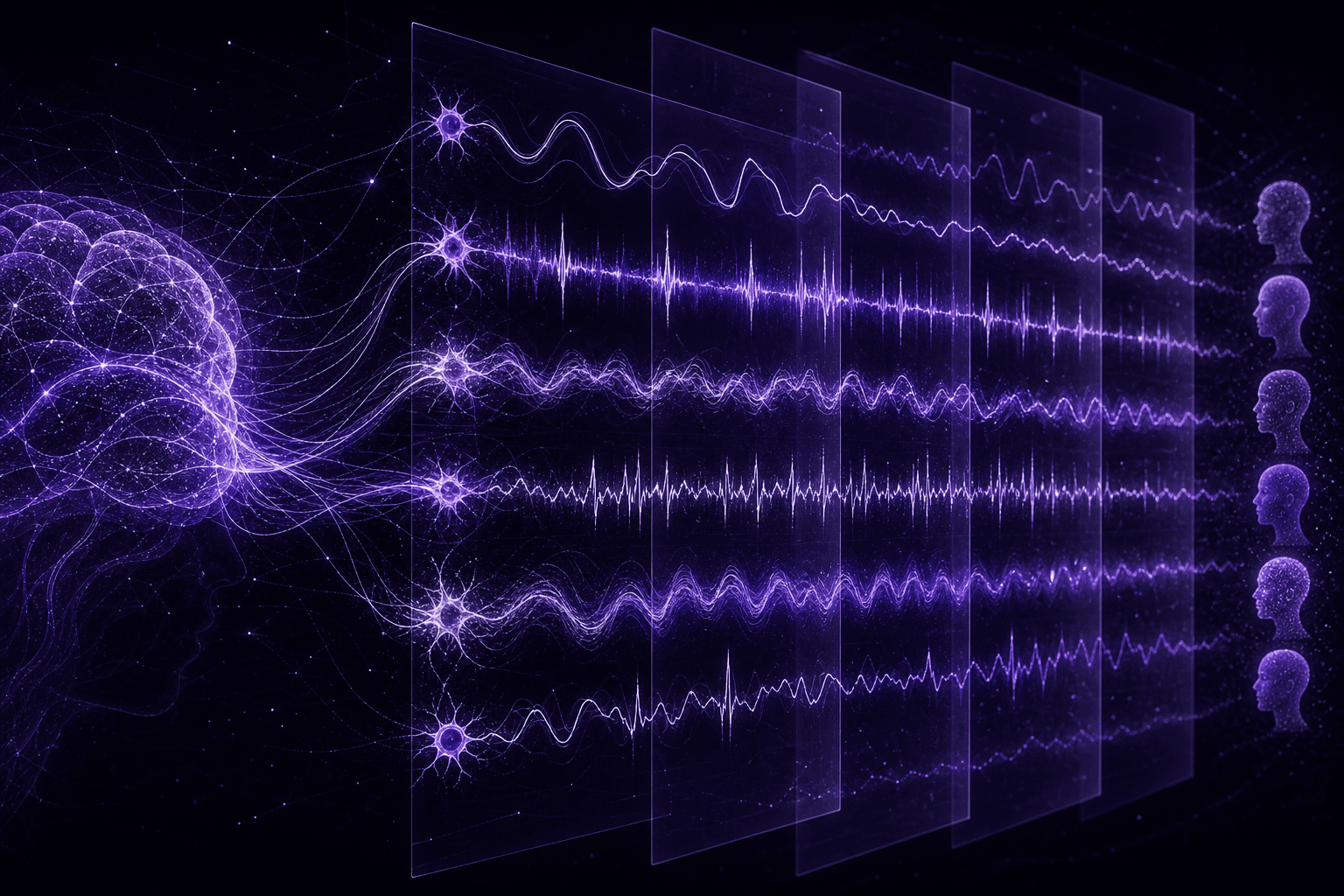
So performance ends up being less about the implant and more about how quickly the system around it learns. And learning, in this world, is really a data problem in disguise. Every implanted patient produces something genuinely rare: neural activity paired with intent, corrections, and adaptation, captured continuously rather than in the occasional clinical snapshot. A single user can throw off millions of labeled timesteps in a single day.
That builds a loop that compounds on itself. More patients bring more longitudinal data, which trains better decoders, which makes the experience better, which brings more adoption, which brings more data. Anyone who's watched software over the last decade will recognize the shape of it. In consumer AI, the companies that built lasting advantages rarely did it through raw compute. They did it through proprietary data and feedback loops that got tighter faster than anyone else's. BCI is starting to rhyme with that pattern, except the dataset here is a human brain, and it keeps improving the more you talk to it.

Which changes what a defensible BCI company will actually sound like in a few years. It probably won't be "we built the best electrode." It'll sound more like: we hold the largest longitudinal dataset for speech decoding in ALS patients, our models adapt in real time off very little supervised data, and because we own the whole loop from implant to daily use, we simply learn faster than anyone competing with us. Hardware doesn't go away in this picture. It just stops being the destination and becomes the on-ramp to the data flywheel sitting behind it.
Where this could be wrong
There's a real case for hardware staying dominant longer than this framing suggests. A genuine step change — an order of magnitude jump in channel count, stability that holds for well over a decade, or implantation that's dramatically safer — could reset the entire competitive landscape on its own. Regulators also tend to favor tightly integrated systems over loosely coupled data platforms, which cuts against the modular version of this story. And data here doesn't scale the way it does in software. You can't get more of it without more surgeries, and patient acquisition is slow, expensive, and bound by ethical constraints that don't apply to scraping the web. The data moat, if it exists, may simply take much longer to dig than it did in consumer AI.
What this means for founders
Worth asking a different question than the one most teams start with. Not how do we record cleaner signals, but how do we squeeze more learning out of the signals we can already record. In practice that means building systems designed to keep improving after deployment rather than freezing once they clear approval, investing in infrastructure for continuous adaptation instead of one-time calibration, and treating every single patient interaction as training data rather than as a validation checkbox.
The companies that end up owning this space probably won't be the ones who got into the brain first. They'll be the ones who got smart the fastest once they were already there.
WorldChangers is a BCI startup accelerator — at most 10 early-stage companies per batch. If you're building at the brain-machine boundary, applications for Batch 01 are open.
Building at the brain–computer interface?
Apply to Batch 01